


Running a small business in 2026 means competing in a faster, more automated market. Customers expect instant responses, personalized experiences, and seamless service. At the same time, business owners must control costs and maximize productivity.
Artificial intelligence is no longer a futuristic advantage — it’s now a practical tool for growth. The right AI tools can automate repetitive tasks, improve decision-making, increase sales, and free up valuable time.
In this guide, you’ll discover the best AI tools for small businesses in 2026, organized by category and real-world use case.
Why Small Businesses Should Use AI in 2026
AI allows small teams to operate like larger companies without hiring additional staff. Instead of replacing people, AI amplifies productivity.
Key benefits include:
- Automating repetitive tasks
- Improving customer support speed
- Generating marketing content faster
- Enhancing sales tracking and forecasting
- Reducing operational costs
The businesses that win in 2026 will not be the biggest — they will be the most efficient.
AI Tools for Marketing
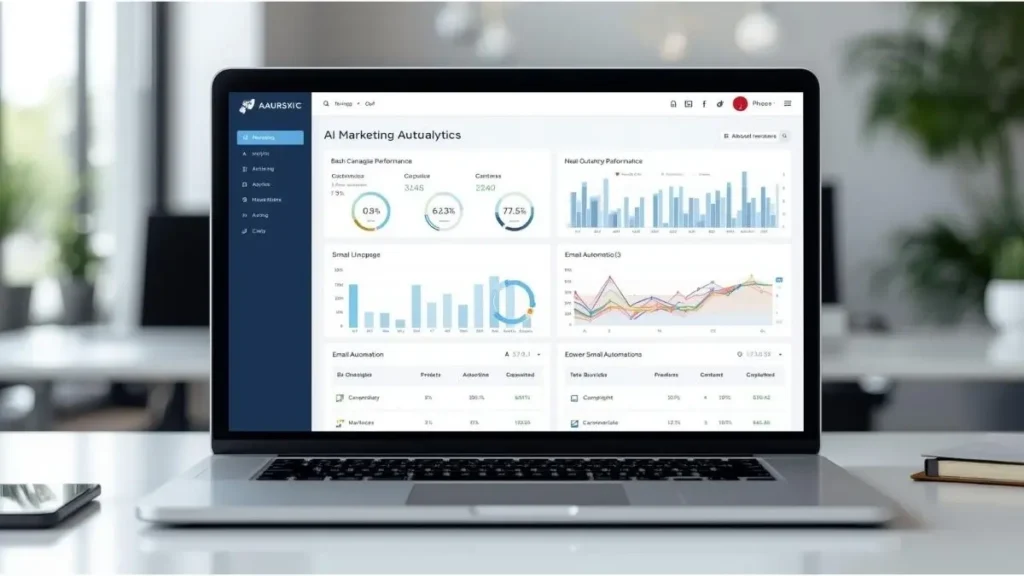
Marketing is often the first area where AI creates immediate impact.
Jasper
Best for: AI-powered content writing
Helps generate blog posts, ad copy, product descriptions, and emails in minutes.
Copy.ai
Best for: Social media and short-form copy
Ideal for entrepreneurs managing multiple channels.
Canva AI
Best for: Visual content creation
Automates design elements and image generation for brand consistency.
Surfer SEO
Best for: SEO content optimization
Helps structure blog posts to rank higher on search engines.
AI Tools for Sales & CRM
AI in sales improves lead management and follow-ups.
HubSpot AI
Automates CRM insights and predicts deal success.
Pipedrive AI
Suggests next steps in sales pipelines.
Apollo.io
Uses AI for smarter lead discovery and qualification.
These tools help small teams close deals faster without expanding staff.
AI Chatbots & Customer Support
Customer experience often determines repeat business.
ChatGPT API
Businesses can build AI-powered assistants for customer inquiries.
Intercom AI
Handles customer support tickets and live chat automation.
Tidio AI
Affordable chatbot solution ideal for e-commerce stores.
AI chatbots reduce response time and operate 24/7.
AI Productivity Tools
Productivity tools help founders reclaim time and reduce mental overload.
Notion AI
Summarizes documents and drafts content.
Motion
Automatically schedules tasks based on priorities.
ClickUp AI
Enhances task management with AI-generated summaries.
These tools reduce friction in daily operations.
AI Automation & Workflow Tools
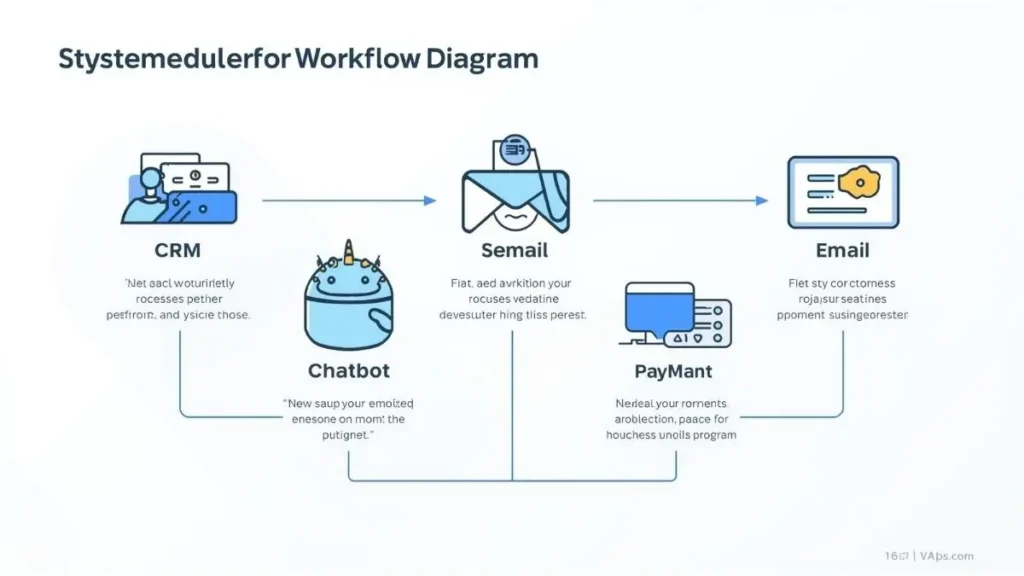
Automation tools connect systems and eliminate manual work.
Zapier
Automates connections between apps like email, CRM, and forms.
Make.com
Builds advanced automation workflows visually.
AI Agents (AutoGPT)
Experimental but powerful for multi-step automation.
Automation is where AI creates true leverage.
How to Choose the Right AI Tool
Before adopting a tool, ask:
- What task consumes the most time in my business?
- Can AI automate or simplify that task?
- Will this integrate with my existing tools?
- Does the cost justify the efficiency gain?
Start with one automation. Measure the impact. Expand gradually.
Comparison Overview
| Tool | Best For | Ideal Business Type | Difficulty Level |
|---|---|---|---|
| Jasper | Content writing | Online businesses | Easy |
| HubSpot AI | CRM automation | Service businesses | Medium |
| Tidio AI | Chatbots | E-commerce | Easy |
| Notion AI | Productivity | Startups | Easy |
| Zapier | Workflow automation | Any small business | Medium |
Real-World Examples: How Small Businesses Are Using AI in 2026
Understanding tools is important — but seeing how they are applied in real scenarios makes implementation easier.
Example 1: Local Service Business
A small HVAC company uses:
- Chatbot on their website to qualify leads
- Zapier to send form submissions to CRM
- HubSpot AI to automate follow-ups
- Motion to schedule technician visits efficiently
Result:
Faster response time, fewer missed leads, and more closed jobs without hiring additional staff.
Example 2: Online E-commerce Store
A Shopify store uses:
- Canva AI for product creatives
- Jasper for product descriptions
- Tidio AI chatbot for customer support
- Klaviyo AI for email automation
Result:
Higher conversion rates, improved abandoned cart recovery, and lower support workload.
Example 3: Consulting or Agency Business
A small marketing agency integrates:
- Notion AI for internal documentation
- Apollo.io for outbound lead generation
- Surfer SEO for client content optimization
- Zapier to connect CRM and invoicing tools
Result:
Better internal organization and scalable client acquisition.
These examples show one key principle: AI is not a replacement strategy — it is a leverage strategy.
How AI Reduces Costs Without Reducing Quality
Many small business owners hesitate because they associate AI with complexity or risk. In reality, AI often reduces operational waste.
Here’s how:
- Eliminates manual data entry
- Reduces response time delays
- Minimizes marketing testing costs
- Prevents human error in repetitive tasks
- Improves customer retention
For example, automating follow-up emails can increase response rates by 20–30% without additional labor.
AI shifts time from repetitive activity to strategic thinking.
AI Implementation Roadmap for 2026
Instead of adopting multiple tools at once, follow a phased approach:
Phase 1 – Identify Bottlenecks
Audit your weekly workflow. Where do you lose the most time?
- Writing content?
- Following up with leads?
- Scheduling meetings?
- Handling support questions?
Choose one.
Phase 2 – Test One Tool
Implement one tool for 30 days.
Track:
- Time saved
- Revenue changes
- Reduction in manual errors
Avoid tool overload.
Phase 3 – Connect Systems
Once comfortable, integrate tools using Zapier or Make.
Example workflow:
Lead form → CRM → Automated email → Calendar booking → Slack notification.
Automation multiplies impact.
Phase 4 – Optimize and Scale
Review performance quarterly.
Remove unused tools.
Upgrade tools generating clear ROI.
Train your team on usage.
Small improvements compound over time.
AI and Data-Driven Decision Making
One of the biggest advantages of AI is improved decision-making.
Instead of guessing:
- Which marketing channel performs best
- Which leads are likely to convert
- Which customers are at risk of churn
AI tools analyze patterns and generate insights.
Predictive analytics in CRM systems help prioritize leads.
Email automation tools adjust send times.
Chatbots collect structured customer feedback.
Data-driven small businesses reduce uncertainty.
Security and Ethical Considerations
As AI becomes more integrated, small businesses must consider:
- Data privacy regulations
- Secure API connections
- Customer transparency
- Responsible AI usage
Best practices include:
- Using reputable platforms
- Limiting unnecessary data storage
- Informing customers about automated systems
- Regularly reviewing tool permissions
AI adoption should increase efficiency without compromising trust.
Emerging AI Trends Small Businesses Should Watch
AI evolves quickly. In 2026, key trends include:
1. AI-Powered Personalization
Marketing campaigns dynamically adjusting to customer behavior.
2. AI Voice Assistants for Business
Automated voice systems handling appointment bookings.
3. Autonomous AI Agents
Tools capable of executing multi-step processes independently.
4. Predictive Customer Retention
Systems identifying churn risk before it happens.
Small businesses that stay informed will adapt faster.
Common Mistakes to Avoid When Adopting AI
- Buying too many tools at once
- Failing to train staff
- Ignoring integration compatibility
- Automating inefficient processes
- Expecting immediate transformation
AI amplifies systems. It does not fix broken ones.
Start simple. Improve gradually.
Measuring the ROI of AI Tools
To evaluate whether an AI tool is worth keeping, measure:
- Time saved per week
- Increase in conversion rate
- Reduction in customer response time
- Reduction in manual workload
- Revenue growth tied to automation
Even saving 5–10 hours per week compounds into significant annual productivity gains.
AI ROI is often measured in time before it is measured in money.
Building an AI-Ready Culture in Your Business
Tools alone are not enough.
Encourage:
- Continuous learning
- Experimentation
- Team collaboration
- Process documentation
Assign one person to oversee AI tools.
Review performance monthly.
Encourage feedback from employees using the tools daily.
The strongest competitive advantage is adaptability.
AI for Different Types of Small Businesses
Local Businesses
Chatbots + scheduling automation + review monitoring.
E-commerce Stores
AI product recommendations + dynamic pricing + email automation.
Agencies
Content automation + CRM automation + reporting tools.
Consultants & Coaches
AI note summarization + email follow-ups + automated onboarding.
Different industries benefit differently — but all benefit from automation.
The Future of Small Business Operations
AI will continue to:
- Reduce administrative friction
- Improve predictive accuracy
- Enhance personalization
- Increase scalability without increasing payroll
Small businesses no longer need enterprise-level budgets to operate with enterprise-level systems.
Technology has leveled the playing field.
Advanced AI Strategies for Small Businesses in 2026
While many companies use AI for basic automation, the most competitive small businesses in 2026 go beyond simple tools. They build integrated systems that connect marketing, sales, operations, and customer service into one intelligent ecosystem.
AI is no longer just about saving time. It is about increasing precision.
When tools communicate with each other, data flows automatically. This creates smarter workflows, reduces human error, and improves forecasting accuracy.
Small businesses that adopt this connected approach operate with greater consistency and fewer operational gaps.
AI-Powered Personalization at Scale
One of the most powerful applications of AI for small businesses is personalization.
Instead of sending generic messages, AI can analyze:
- Customer browsing behavior
- Purchase history
- Engagement timing
- Email interaction patterns
- Product preferences
With this data, businesses can create:
- Personalized email campaigns
- Product recommendations
- Dynamic website content
- Automated follow-ups based on behavior
Personalization increases conversion rates and customer retention. In competitive markets, tailored communication often becomes the deciding factor.
Predictive Analytics for Revenue Growth
Modern AI tools allow small businesses to move from reactive decisions to predictive strategies.
CRM systems with AI can:
- Identify high-probability leads
- Forecast quarterly revenue
- Detect deals at risk
- Recommend optimal follow-up timing
Instead of chasing every prospect equally, sales teams focus on leads most likely to convert.
Predictive insights reduce wasted effort and increase close rates.
AI in Financial and Operational Efficiency
AI tools also improve financial management and administrative control.
Examples include:
- Automated expense categorization
- Invoice generation
- Cash flow forecasting
- Subscription revenue tracking
- Budget anomaly detection
When AI monitors financial activity, business owners gain clearer visibility over performance trends.
Operational efficiency improves when repetitive tasks are automated and standardized.
AI Workflow Example: End-to-End Automation
Here’s how a fully automated workflow might look for a service-based business:
- Visitor submits a form on the website
- Zapier sends data to CRM
- Automated email confirmation is triggered
- Chatbot offers scheduling link
- Calendar syncs with internal team
- Follow-up reminder is scheduled
- Payment link is generated automatically
This reduces manual intervention and prevents lead loss.
Automation ensures consistency.
AI Maturity Levels for Small Businesses
Not every business should adopt advanced AI immediately. A structured progression works best.
Level 1 – Basic Automation
Simple chatbots and automated email responses.
Level 2 – Integrated Systems
CRM, marketing, and scheduling tools connected through automation.
Level 3 – Predictive Optimization
Revenue forecasting, churn prediction, and AI-driven reporting dashboards.
Gradual implementation ensures smoother adaptation.
AI Cost vs Benefit Analysis
Many small business owners hesitate due to perceived cost.
However, consider this comparison:
Typical AI stack monthly cost:
Content AI tool: $49
CRM AI: $50
Chatbot software: $39
Automation tool: $29
Total: Around $167 per month.
If AI saves just 10 hours per week at $25 per hour, that equals $1,000 in monthly recovered productivity.
The financial logic becomes clear quickly.
Common Implementation Mistakes
Small businesses should avoid:
- Adopting too many tools at once
- Ignoring integration compatibility
- Failing to train staff
- Automating inefficient processes
- Expecting immediate transformation
AI multiplies structured systems. It does not correct disorganized workflows.
Building a Long-Term AI Strategy
Instead of treating AI as a short-term experiment, successful small businesses build a long-term strategy.
This includes:
- Regular performance reviews
- Data analysis meetings
- Ongoing staff training
- Continuous workflow optimization
- Tool evaluation every quarter
AI should evolve with the business.
The Competitive Edge of Early Adoption
Early adopters benefit from:
- Faster learning curves
- Better data accumulation
- Process refinement
- Market adaptability
Over time, these advantages compound.
Small businesses that delay AI adoption often struggle to compete against automated competitors.
AI and the Future of Small Business Leadership
Leadership in 2026 requires strategic thinking, not just operational management.
AI reduces administrative burden, allowing business owners to focus on:
- Innovation
- Partnerships
- Customer relationships
- Market expansion
AI frees time for high-value decision-making.
Final Strategic Perspective
The best AI tools for small businesses in 2026 are not simply software solutions — they are operational leverage systems.
They convert:
Time into scalability
Data into insight
Automation into consistency
Speed into competitive advantage
Small businesses that integrate AI strategically will operate leaner, faster, and more profitably.
AI is no longer optional. It is foundational to sustainable growth.
Conclusion: The Strategic Advantage of AI in 2026
AI tools are no longer experimental — they are foundational.
Small businesses in 2026 must operate with agility, precision, and efficiency. Artificial intelligence enables exactly that.
By automating repetitive tasks, improving marketing and sales processes, enhancing customer experience, and optimizing internal workflows, AI becomes a multiplier for small teams.
Start small.
Measure impact.
Scale intentionally.
The businesses that thrive in 2026 will not be those that work the hardest — but those that build the smartest systems.
And AI is at the center of that transformation.
Frequently Asked Questions
What are the best AI tools for small businesses in 2026?
Marketing automation, CRM AI, chatbots, and workflow automation tools deliver the highest ROI.
Are AI tools expensive for startups?
Many tools offer affordable or free starter plans.
Can AI really increase revenue?
Yes. By improving efficiency, response time, and data-driven decisions, AI directly supports growth.
Is AI necessary for small businesses?
Businesses that adopt AI strategically gain competitive advantages in speed and cost control.
Final Thoughts
AI tools are no longer optional for small businesses looking to scale efficiently in 2026. With the right combination of marketing automation, CRM intelligence, customer support bots, and workflow automation, small teams can operate at a much higher level.
Start small. Automate one area. Measure results. Expand from there.
The future belongs to businesses that move faster — and AI makes that possible.