
You don’t need thousands of dollars to build something meaningful. You just need the right idea—and the courage to begin.
Imagine this: It’s January 2026. You’re sitting at your kitchen table, scrolling through your phone, wondering if you’ll ever escape the 9-to-5 grind. You have big dreams—a business that reflects your values, flexible hours, maybe even financial freedom—but your bank account says “not yet.”

Here’s the truth: You don’t need money to start. You need momentum.
In this guide, you’ll discover real, tested strategies to launch a business in 2026—even if you’re starting with $0. No fluff. No “get-rich-quick” schemes. Just practical steps used by real people who turned skills, time, and creativity into income.
We’ll cover how to leverage free tools, trade services instead of cash, validate ideas before spending a dime, and scale without debt. Whether you’re a student, a side-hustler, or someone rebuilding after a setback, this is your roadmap.
Let’s turn your “someday” into today.
Why Starting a Business With No Money Is Not Only Possible—It’s Smart
Starting a business with no money isn’t a limitation—it’s a strategic advantage.
When you begin with zero capital, you’re forced to focus on what truly matters: value creation. You can’t hide behind fancy websites or paid ads. Instead, you learn to solve real problems for real people. And that’s the foundation of every lasting business.
Consider this: According to a 2025 U.S. Small Business Administration report, 68% of microbusinesses (under $50K revenue) started with less than $1,000. Many began with nothing but a laptop and an internet connection.
The digital economy has leveled the playing field. Platforms like Etsy, Gumroad, Instagram, and LinkedIn let you reach customers without renting office space or printing brochures. AI tools can draft emails, design logos, and analyze data—for free.
More importantly, bootstrapping builds resilience. You learn to measure ROI from day one. You talk directly to customers. You iterate fast. These habits separate hobbyists from founders.
So forget the myth that entrepreneurship requires deep pockets. In 2026, your most valuable assets are your time, your curiosity, and your willingness to learn.
Step 1: Turn What You Already Have Into Your First Product
You already own everything you need to start.
Seriously. Look around:
- Your skills (writing, organizing, teaching, designing)
- Your devices (phone, laptop, tablet)
- Your network (friends, former colleagues, online communities)
- Your daily experiences (problems you’ve solved, frustrations you’ve felt)
These aren’t just possessions—they’re raw materials for your business.
The “Skill-to-Service” Method
Ask yourself: “What do people often ask me for help with?”
- Do friends say, “You’re so good at calming chaos—can you help me organize my home office?” → Virtual organization consultant
- Did coworkers rely on you to simplify complex reports? → Business clarity coach
- Are you the go-to person for resume edits? → Career document specialist
One real example: Maria, a former teacher in Texas, noticed parents struggling with homeschooling during school breaks. She created a free 3-day “Learning Reset” email course using Canva and MailerLite (both free). Within two weeks, 200 parents signed up. She then offered a $29 “Summer Learning Kit”—and made $1,200 in her first month.
Your action step: List 3 things people compliment you on. Then, reframe each as a service you could offer this week.
💡 Pro Tip: Don’t wait for perfection. Launch a “minimum viable offer” (MVO)—a simple version of your service—to test demand. A clear, specific offer (“I’ll audit your LinkedIn profile in 24 hours for $20”) beats a vague promise (“I help with careers”).
Step 2: Use Free Tools to Build Your Business Infrastructure
You don’t need to spend money to look professional. In 2026, powerful free tools handle everything from branding to payments.
Your Zero-Dollar Tech Stack:
| Function | Free Tool | Why It Works |
|---|---|---|
| Website | Carrd.co or WordPress.com (free plan) | Simple, mobile-friendly, connects to social media |
| Email Marketing | MailerLite (free up to 1,000 subs) | Automate welcome sequences, collect leads |
| Graphics | Canva | Create logos, social posts, PDF guides in minutes |
| Scheduling | Calendly (free tier) | Let clients book calls without back-and-forth emails |
| Payments | PayPal, Stripe, or Cash App | Accept payments instantly—no merchant account needed |
| AI Assistant | Claude.ai or Microsoft Copilot | Draft content, brainstorm ideas, analyze feedback |
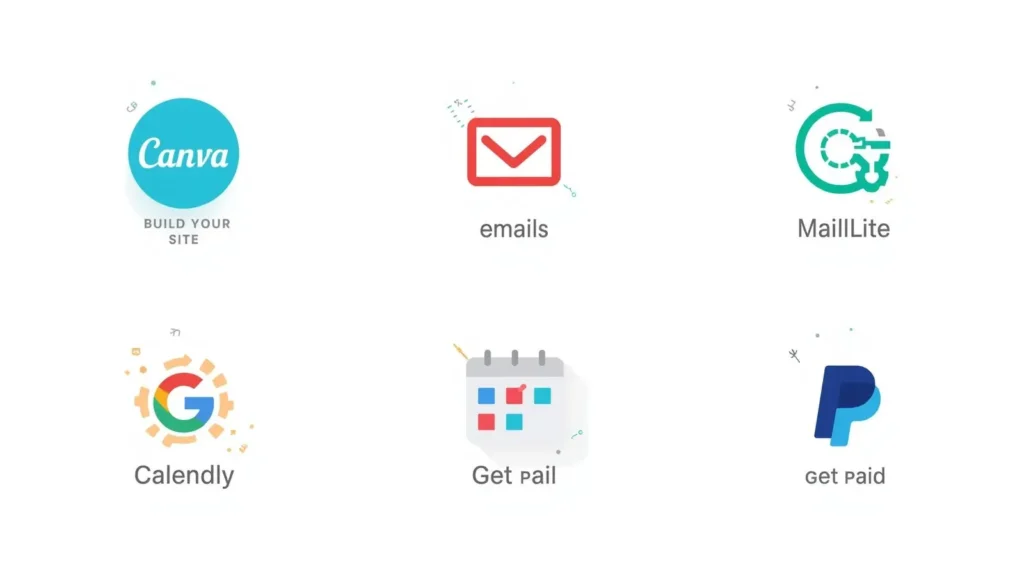
Maria (from earlier) used Carrd to build a one-page site in 20 minutes. She embedded her Calendly link, added a PayPal button, and linked her MailerLite signup form. Total cost: $0.
Avoid this trap: Don’t get stuck “building your brand” for weeks. Your first goal isn’t beauty—it’s clarity and function. A plain but clear website converts better than a flashy but confusing one.
📌 Key Insight: Tools are enablers, not magic wands. Focus on one platform at a time. Master it. Then add another.
Step 3: Trade Value Instead of Cash (The Barter Strategy)
Money isn’t the only currency. In 2026, time, attention, and collaboration are equally valuable.
How to Barter Like a Pro:
- Identify what you can give: 1 hour of social media help? A custom spreadsheet? Proofreading?
- Find someone who needs it: Join Facebook groups, Reddit communities, or local meetups.
- Make a specific offer: “I’ll design your Instagram highlight covers if you write a testimonial for my new service.”
Real story: Jake, a freelance writer, needed a logo but had no budget. He messaged a graphic designer on Instagram: “I’ll write 3 SEO blog posts for your portfolio if you design my logo.” They agreed. Both got value—no money changed hands.
Where to Find Barter Partners:
- Reddit: r/smallbusiness, r/forhire, r/slavelabour
- Facebook Groups: “Digital Nomad Jobs,” “Freelance Exchange”
- Local: Co-working spaces, community centers, university bulletin boards
⚠️ Protect Yourself: Always agree on deliverables in writing (even via DM). Set deadlines. Treat barter like a real contract.
This strategy does more than save money—it builds relationships and social proof. Your first client might refer you to their network. That’s worth more than cash.
Step 4: Validate Your Idea Before Spending a Dime
Most businesses fail because they build something nobody wants. Don’t guess—test.
The $0 Validation Framework:
- Describe your offer in one sentence: “I help [ideal customer] achieve [specific result] by [your method].”
Example: “I help busy moms launch Etsy shops in 7 days using templates and done-for-you checklists.” - Post it where your audience hangs out:
- Reddit threads (“What’s your biggest struggle with X?”)
- Facebook groups (“Would you pay $29 for this?”)
- Instagram Stories poll (“Which would help you more: A or B?”)
- Pre-sell before creating:
Create a simple landing page (using Carrd) with a “Get Early Access” button. If 10+ people sign up, you have demand.
Sarah wanted to sell printable planners. Instead of designing 50 pages, she posted a mockup in a productivity group: “Would you buy a $12 ‘Focus Planner’ with daily intention prompts?” 47 people said yes. She built it that weekend—and sold 80 copies in 3 days.
💡 Golden Rule: If people won’t raise their hand for a free version, they won’t pay for the paid one.
Validation isn’t about permission—it’s about direction. It turns uncertainty into confidence.
Step 5: Grow Through Organic Visibility (Not Paid Ads)
With no ad budget, your growth engine is organic visibility—showing up where your audience already is.
The 3-Channel Strategy for 2026:
- Search (SEO): Answer questions people are typing into Google.
- Use free tools like Google Trends or AnswerThePublic to find queries.
- Write helpful posts (like this one!) that rank over time.
- Social (Community): Provide value in groups, not just your feed.
- Comment thoughtfully on LinkedIn posts.
- Share quick tips in Reddit threads (without self-promoting).
- Word-of-Mouth (Referrals): Make it easy for happy clients to spread the word.
- Add a line to your email signature: “Loved working together? Share this link!”
- Offer a small thank-you (e.g., “Refer a friend, get a free bonus”).
Remember: Consistency beats intensity. Posting one useful tip per week builds trust faster than sporadic viral attempts.
🌱 Mindset Shift: You’re not “promoting”—you’re helping. Every piece of content should solve a micro-problem.
Real Stories: People Who Started With Nothing (And Built Something Real)
Case 1: From Unemployed to $3K/Month
After being laid off in 2025, David had $47 in his account. He noticed small businesses struggling with Google Reviews. He offered a free “Review Boost” checklist via a Google Form. Within a week, 30 local shops downloaded it. He then emailed: “Want me to set this up for you? $99 one-time.” He closed 8 clients—earning $792 in 10 days. Today, he runs a small agency helping restaurants manage their online reputation.
Case 2: The Student Side Hustle
College student Lena used her class notes to create a “Study Survival Kit” for her biology course. She sold it on Etsy for $7. Professors even recommended it! By finals week, she’d made $1,200. She now creates kits for 5 courses—and reinvests profits into Canva Pro and a domain name.
What They All Have in Common:
- They started before they felt ready.
- They focused on one tiny problem.
- They asked for feedback, not perfection.
Your story doesn’t need to be dramatic. It just needs to begin.
Common Mistakes to Avoid (And How to Sidestep Them)
Even with $0, you can waste your most precious resource: time. Here’s how to stay on track.
❌ Mistake 1: Trying to Do Everything Alone
Fix: Partner early. Need a logo? Trade with a designer. Overwhelmed by tech? Ask a friend for a 15-minute Zoom walkthrough.
❌ Mistake 2: Waiting for the “Perfect” Name or Logo
Fix: Use your name or a simple descriptor (“Alex’s Social Media Templates”). You can rebrand later—after you have customers.
❌ Mistake 3: Ignoring Legal Basics
Fix: Even solopreneurs need protection. In most U.S. states, you can register a DBA (“Doing Business As”) for under $20. Use free templates from LawDepot for contracts.
❌ Mistake 4: Giving Up After Week 1
Fix: Track non-financial wins: “5 people signed up,” “1 client gave a testimonial,” “I published my first post.” Momentum builds slowly—then all at once.
💬 Remember: Done is better than perfect. Revenue is better than polish.
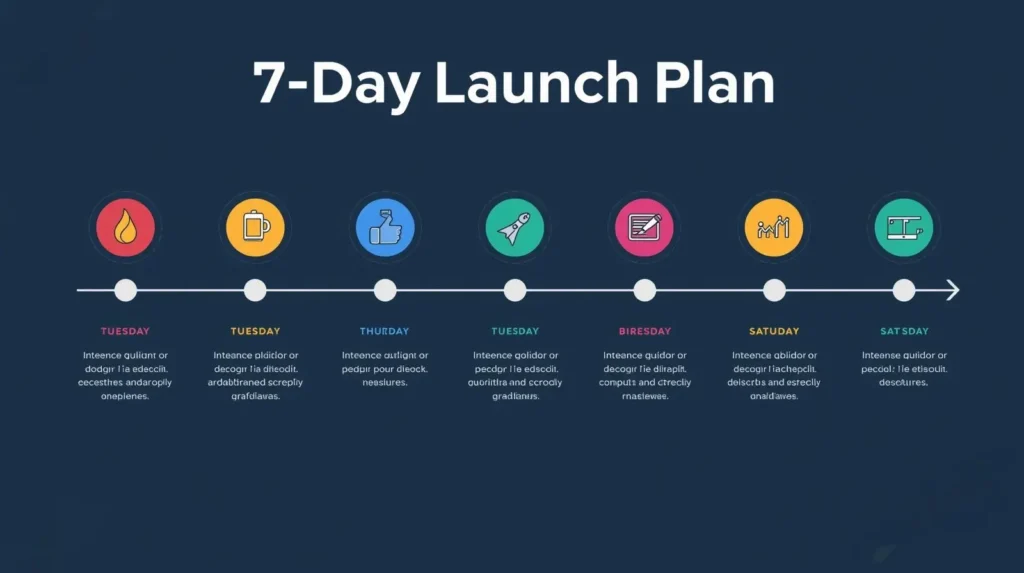
Your First 7 Days: A Zero-Dollar Launch Plan
Ready to start? Here’s your exact roadmap for Week 1:
Day 1: Define your offer
→ Write: “I help [X] achieve [Y] by [Z].” Keep it under 15 words.
Day 2: Build your base
→ Create a Carrd page with your offer, a Calendly link, and PayPal button.
Day 3: Find 10 ideal customers
→ Join 2 online communities. Lurk. Understand their pain points.
Day 4: Offer value first
→ Share a free tip related to your offer (e.g., “3 mistakes to avoid when…”).
Day 5: Make your first ask
→ Message 3 people: “I’m testing a new service—would you try it for free in exchange for feedback?”
Day 6: Deliver & ask for a testimonial
→ Over-deliver. Then say: “If this helped, would you share 1 sentence about your experience?”
Day 7: Reflect & plan Week 2
→ What worked? Double down. What flopped? Drop it.
This isn’t theory. This is what real founders do.
Final Thoughts: Your Business Doesn’t Need Money—It Needs You
Starting a business with no money isn’t about scarcity—it’s about resourcefulness. It’s about looking at what you already have and saying, “This is enough to begin.”
In 2026, the barriers to entry have never been lower. But the competition for attention and trust has never been higher. That’s where you win—not with a big budget, but with authenticity, consistency, and care.
You don’t need permission. You don’t need investors. You just need to take the first step—however small.
So ask yourself: What’s one thing I can do today?
- Send that message?
- Post that idea?
- Offer that free help?
Do it. Then do it again tomorrow.
Your future self will thank you.
📣 Your Turn
What’s the one skill or idea you’ve been sitting on? Share it in the comments below—I’d love to cheer you on! And if this guide helped you, please share it with someone who needs to hear: “You can start. Right now. With what you have.”